
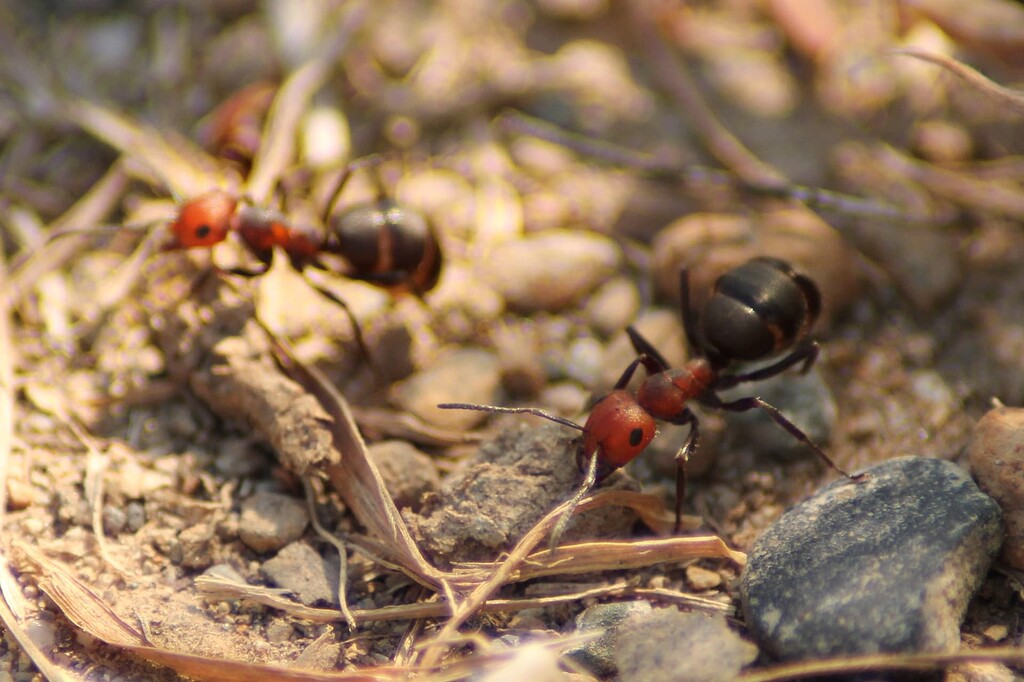
One might think they would find a massive ant hill this size in Texas or maybe even Africa, but most of us are surprised to see a giant ant hill overlooking Sandpoint. Possibly one of the tallest in the region!
Is a Giant Western Thatching Ant Hill Dangerous?
- Western Thatching Ants are not, according to most experts!
- To humans: They don’t sting, but they bite and spray formic acid into the wound, which causes a burning sensation. Not life-threatening, but not pleasant either.
- To pets & livestock: Curious animals that disturb the mound may get swarmed and bitten. Chickens often avoid these ants altogether.
- To property: They don’t eat wood or damage buildings like carpenter ants or termites, so they’re not a threat to your home.
North Idaho: Nature’s Tiny Architects
When most people think of impressive wildlife in North Idaho, they picture moose, elk, or bald eagles. But tucked away in the forests and meadows of Bonner County, there’s another fascinating builder hard at work: the Western Thatching Ant (Formica obscuripes). On my homestead, I’ve discovered a massive thatching ant mound that towers nearly 4 feet above ground—one of the largest I’ve ever seen.
In this article, I’ll dive into what makes these ants unique, why their mounds get so large, and whether they’re helpful or harmful to your land.
What Are Western Thatching Ants?
Western Thatching Ants are a red-and-black ant species native to the western United States, including Idaho. They’re named for their distinct mounds made of pine needles, twigs, and bits of vegetation, which resemble a thatched roof.
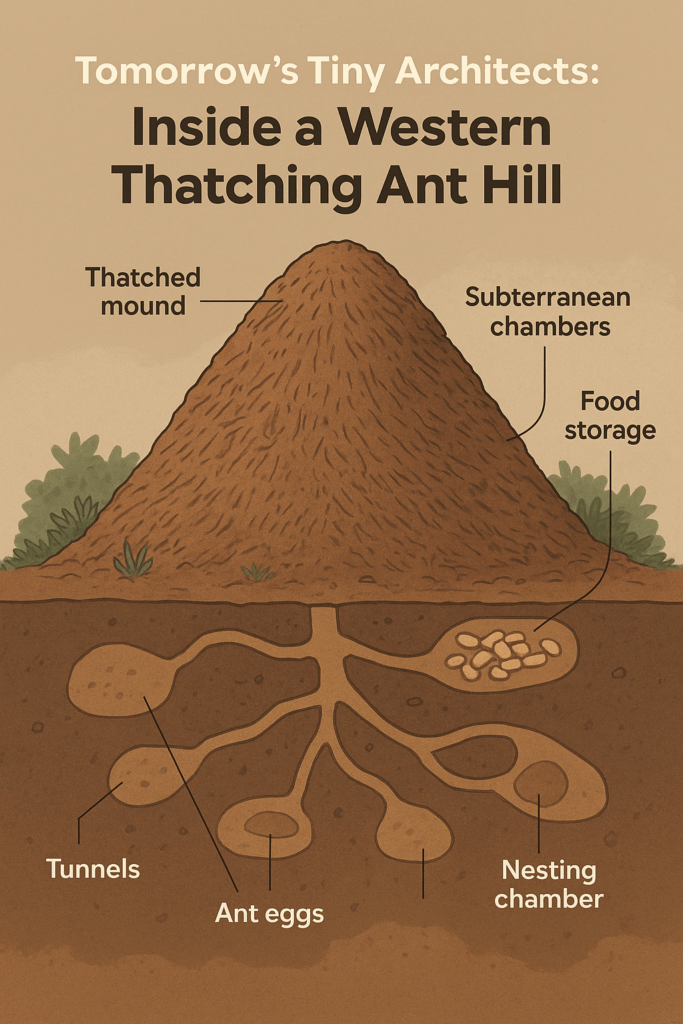
These mounds aren’t just piles of debris—they’re engineered micro-cities housing tens of thousands (sometimes hundreds of thousands) of ants. Beneath the visible thatch, the ants build deep underground tunnels that can extend several feet below the soil.
How Big Can Thatching Ant Mounds Get?
On average, a Western Thatching Ant hill might be 1–2 feet tall. But in the right environment, with steady growth over many years, they can reach 3–4 feet tall above ground, with even more structures hidden beneath the surface.
My own mound overlooking Sandpoint, Idaho, stands about 4 feet tall, making it one of the largest I’ve ever encountered—and possibly one of the tallest in the region!
Are Western Thatching Ants Beneficial?
Yes—despite their aggressive defense of their mounds, they’re beneficial insects in several ways:
- They hunt other insects, including pests that might damage gardens or crops.
- Their tunneling helps aerate the soil.
- They help with seed dispersal, aiding plant growth and diversity.
In a way, they’re a free pest-control team working 24/7 on the homestead.
Should You Remove a Large Ant Hill?
That depends:
- If it’s in your yard, garden, or near livestock pens: You might consider controlling it, since they’re aggressive when disturbed.
- If it’s in the woods or an unused part of your property: It’s often best to leave it alone and admire it as part of the ecosystem.
Because my 4-foot mound is tucked in the woods, I’ve chosen to leave it as a living natural landmark on my homestead.
Fascinating Facts About Giant Western Thatching Ant Hills
- Colonies can live for decades, continually expanding the mound.
- Ants maintain the thatch carefully, even adjusting the thickness to control temperature and moisture inside.
- Large colonies may have multiple queens.
- These ants are so defensive, even deer have been known to avoid grazing near their mounds.
Final Thoughts
Here in Bonner County, Idaho, I never expected to find one of the most impressive insect engineering marvels right in my backyard. At 4 feet tall, this Western Thatching Ant mound isn’t just an anthill—it’s a thriving city of tiny architects working together in perfect coordination.
While they may bite if you get too close, they’re a reminder of the balance of nature on the homestead—every creature, even ants, plays an important role.
If you ever come across a massive mound like this, take a moment to appreciate the hard work and ingenuity of the Western Thatching Ants of Idaho.